The four tests we put every game through
Before any of these became picks, each one had to pass the same four checks. They are worth knowing even if you ignore every recommendation here, because they will tell you whether the game you already have in mind is right.
1. Rated E by the ESRB. E means “Everyone” — the ESRB’s own ratings guide defines the ladder, and the next rung up, E10+, is explicitly for ages ten and over. Every pick on this page is rated E. That is a deliberately hard line: plenty of E10+ games are perfectly fine for a six-year-old in practice, but we are not going to be the ones to tell you that about somebody else’s child. If you want to know what the letter and the small print under it mean, our age ratings guide unpacks both.
2. No reading required to start. A six-year-old who is still learning to read cannot work through a written tutorial, and will not ask for help — they will just stop playing. Everything here is startable from pictures: pick a character, pick a track, go.
3. Losing does not cost them anything. This is the one adults consistently underrate. A game that sends a child back to the start of a level is a game that produces tears at this age. A race they come eighth in is over in two minutes and they can go again.
4. A grown-up can join, but does not have to. The best present here is one they can play alone on a wet Sunday and one you can be beaten at on Christmas morning. Every pick below does both.
Start with the console, not the game
One warning before anything else, because it is the mistake that cannot be fixed by taste: a game bought for the wrong machine is a dead present. A Nintendo game will not run on an Xbox. An Xbox game will not run on a PlayStation. And the Nintendo Switch 2 is its own machine — it plays most original Switch games, but games made for the Switch 2 do not work the other way round, which our Switch 2 compatibility guide goes through in detail.
In practice, most six-year-olds in the US are playing on a Nintendo Switch of some kind, which is why five of the seven picks here are Switch games. If you are not sure which console is in the house — and “a Switch” could mean three different machines — the honest answer is to ask, or to hand over a gift card for their store and let the adult in the house spend it.
Why Mario Kart is the default answer
It is the default answer because of the items, not the karts. A kart racer hands a losing player the weapons to hit the leader, which means a six-year-old racing an eleven-year-old is still in the race at the final corner. Nothing else on a console levels a family out like that.
There is a practical version of the same point. Nintendo lists Mario Kart 8 Deluxe at 1-4 players on one system and up to 12 online, with 48 courses in the base game. A six-year-old does not need 48 courses — but the eleven-year-old and the parent do, which is what keeps the game in the living room for years rather than weeks. If their house has a Switch 2 instead, Mario Kart World is the newer, larger version of exactly that idea: Nintendo lists it as a Switch 2 exclusive with 1-4 players on one system and up to 24 online, and our head-to-head on the two Mario Karts covers which is the better buy, and our Mario Kart World review judges whether the newer one earns its price as a gift.
What about PlayStation and Xbox?
Both are thinner ground for this age, and we would rather say so than pad the list.
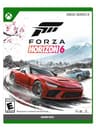
Xbox: Forza Horizon 6 is the pick, and it is a genuinely good one — an open world full of real cars that rewards a child simply driving around looking at things, rated E. The other obvious Xbox answer is Minecraft, which is rated E10+ rather than E, so it sits outside this page’s hard line; our what age is Minecraft for guide is the honest treatment of that question if it is what they have asked for. More Xbox options are on the Xbox games list.
PlayStation: the flagship family game on a PS5 is Astro Bot, and the ESRB rates it E10+ — so it fails the test this page is built on, even though a great many six-year-olds play it happily. We are not going to put it in a numbered list of games for six-year-olds on that basis. If a PS5 is the machine in the house, go to the PlayStation games list and read the rating on each one against the child you are buying for.
The two things people buy by mistake at this age
A game that is really a reading game. Animal Crossing, Stardew Valley and Pokemon are the three that come up most, and all three are lovely games that a six-year-old will mostly watch an adult play, because the gameplay is delivered in text. They are superb presents at eight or nine. At six they tend to be put down after a week.
An accessory instead of a game. A headset, a case or a controller grip is not a present to a six-year-old — it is a present to their parent. The exception is a second controller, because it is the thing that turns a one-player house into a two-player one: our controller-counting guide does the arithmetic for every Switch model, and no console comes with four.
Physical copy or download code?
For a six-year-old, a physical copy has one real advantage: there is something in the wrapping paper. A download code is an email, which is a poor thing for a child to open even though it is the better buy for a last-minute present.
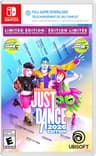
There is also a wrinkle on the Switch 2 specifically that catches gift buyers out. Some Switch 2 games now ship as a Game-Key Card — a physical card in a physical case that holds no game data at all and downloads the game on first launch. It looks exactly like a normal game on the shelf. Our Game-Key Card explainer shows how to spot one and what it needs to work, and our physical versus digital comparison covers the wider trade.