Physical vs Digital Games: Which Is the Better Gift?
One can be wrapped, handed over and returned if it's wrong. The other arrives in seconds and can never be lost. Both are perfectly good gifts — this is how to pick the right one for your situation.
The short answer: Buy physical if the gift needs to be unwrapped in front of someone, if you might need to return it, or if the recipient likes keeping a shelf of games. Buy digital if you're running out of time, posting to a different address, or worried about a duplicate — a store card is the digital route that can never be the wrong game.
Twenty years ago this question didn’t exist: a game was a box. Today the same game is often sold both ways, sometimes at different prices, and a gift buyer has to pick. Neither choice is wrong, but they fail in different ways, and the failure modes are what should drive your decision.
One important thing to establish first: some consoles cannot play discs at all. The Xbox Series S and the digital editions of the PlayStation 5 have no disc slot. A boxed disc game bought for one of those is unusable. Nintendo Switch games come on small cartridges rather than discs and every Switch model takes them, so that family is safe either way — though some Switch boxes contain a download code rather than a cartridge, which is worth checking on the packaging.
How this is funded: Player Two Co earns a commission if you buy through our links, at no extra cost to you. It never changes which gift we recommend, and we’ll tell you when we’d skip one. Full disclosure.
Choose in ten seconds
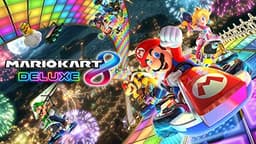
Physical
Nintendo Mario Kart 8 Deluxe
A boxed game on a disc or cartridge. Something real to wrap, something they can lend, sell or keep on a shelf — and something a shop will take back.
Choose it if
- There'll be an occasion where they open presents
- You want the option to return or exchange it
- They like owning and displaying their games
- You're buying for a child who'd rather have a box
$59.99 · See it on AmazonPrice as of October 23, 2026. #ad How we’re funded
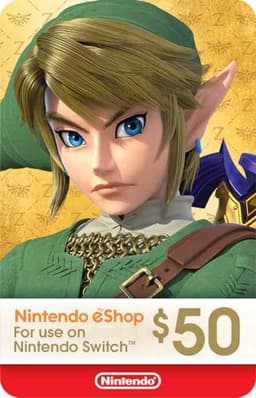
Digital
Nintendo eShop Gift Card
A code, delivered by email or printed on a card. Instant, impossible to lose in the mail, and a store card version means they pick the game themselves.
Choose it if
- It's the day before and nothing will arrive in time
- They live somewhere else and posting is a hassle
- You're not certain what they already own
- Their console has no disc drive
$50.00 · See it on AmazonPrice as of October 23, 2026. #ad How we’re funded
Side by side
| Physical | Digital | |
|---|---|---|
| Can be wrapped | Yes | Only if it's a printed card |
| Delivery time | Shipping time | Minutes, by email |
| Returnable | Usually, if sealed | Almost never once revealed |
| Duplicate risk | Real — you can't see their library | None if you buy a store card |
| Can be resold or lent | Yes | No |
| Needs a disc drive | Yes on PlayStation and Xbox | No |
| Often cheaper | Frequently discounted at retail | Sale prices vary by store |
| Feels like a present | Yes — there's an object | Less so, unless it's a card in an envelope |
The case for physical
There is something to open. This sounds sentimental and it’s actually the strongest practical argument. If there’s a birthday morning or a Christmas tree involved, a person watching someone else read out a code on a phone is not the same event. For children in particular, the box is part of the gift.
You can take it back. A sealed physical game can usually be returned or exchanged if you got the console wrong or they already had it. A revealed digital code generally cannot be, anywhere. Given that buying the wrong platform is the most common gaming gift mistake, that safety net is worth real money.
It has a life after them. They can lend it to a friend, sell it, or keep it on a shelf. Digital games can’t be passed on at all, and some people genuinely care about that. On a Nintendo Switch 2 there is now a third kind of box to know about — a Game-Key Card, which is physical, still passes to another console, but downloads the game on its first launch.
Discounts are often deeper. Retailers cut physical prices to clear stock in a way digital stores don’t always match. The live prices on this site are checked daily, so it’s worth glancing at both.
The case for digital
Time. This is the big one. A digital code can be bought and delivered in the time it takes to make a coffee, which makes it the only real option once shipping windows have closed. If you’re reading this on the 23rd of December, buy digital.
Distance. Gifting to someone in another city means postage, timing and an address you might not have. A code goes to an email address.
Nothing gets lost. No damaged disc, no cartridge that vanishes down the back of a sofa. For a household with young children this is not a small point.
The duplicate escape hatch. Buy a store gift card rather than a specific game and the duplicate problem disappears entirely: they choose, so they can’t already own it. Modern game libraries are digital and invisible, which means you cannot check a shelf to be sure, and this is the clean way out of that.
How to gift digital on each platform
The mechanics differ enough that it’s worth being specific, and each one has its own guide here:
- Xbox has a proper gift button in its store, so you can send a specific game directly to someone. Here’s the walkthrough.
- Steam (PC) has a gift option that, since July 2026, can send a game to a plain email address — no friends list, and no Steam account of your own required. Here’s how it works.
- Nintendo Switch has no direct game-gifting button, so the route is a download code or an eShop card. The options, explained.
- PlayStation has no gift button either — a PlayStation Store card is the way. What actually works.
The hybrid answer nobody mentions
You can do both, and it’s often the best version of this gift: buy the digital code or the gift card, then print it, put it in a proper card, and wrap something small and physical alongside it — a cheap accessory, a keyring, a plush. They get something to open and something to play within five minutes, and you get the flexibility.
Our recommendation
If there’s an occasion with wrapping paper and you know their console: buy physical, and buy it early enough to exchange it if you’ve guessed wrong.
If you’re short of time, buying from a distance, or genuinely unsure what they own: buy a store card for their platform, put it in an envelope, and don’t feel bad about it. Recipients consistently report being happy with cards; it’s the givers who worry.
Digital is more shareable than it used to be
One of the strongest arguments for physical — that you can hand a card to a sibling — has weakened. Nintendo now treats digital purchases as virtual game cards that can be lent to a family group member for 14 days and loaded between two consoles, and a Switch 2 can share a supported game live with a second console that does not own it. Our guide to sharing Nintendo Switch games sets out all three routes and the limits on each, which is worth reading before this page talks you into boxed copies.
There is one situation where this stops being a preference and becomes a hard rule. If the household’s internet is unreliable or absent, a Switch still plays games offline — but only from a normal game card, because a Switch 2 Game-Key Card holds no game data and has to download the whole thing on first launch.
Frequently asked questions
Is a physical or digital game a better gift?
Physical if the gift will be unwrapped at an occasion and you know which console they own — you also keep the option to return it. Digital if you're short on time, buying from a distance, or unsure what they already have. A digital store card is the version that can never be a duplicate.
Can you return a digital game code?
Generally no. Once a code has been revealed or redeemed, stores almost never accept a return. A sealed physical game can usually be returned or exchanged, which is a real advantage when there's any chance you've got the console wrong.
Do all consoles play disc games?
No. The Xbox Series S and the digital editions of the PlayStation 5 have no disc drive at all, so a boxed disc game is useless to them. Nintendo Switch games come on cartridges rather than discs and work on every Switch model, though some Switch boxes contain only a download code — check the packaging.
How do I avoid buying a game they already own?
Buy a store gift card for their console instead of a specific game. Digital game libraries are invisible, so you cannot check a shelf to be sure, and a card removes the risk entirely because they choose the game themselves.
Can you gift a digital game directly to someone?
On Xbox and on Steam, yes — both have a gift option that sends a specific game to a friend or an email address. Nintendo and PlayStation have no direct game-gifting button, so the route there is a download code or a store gift card.
What's the best way to make a digital gift feel like a present?
Print the code, put it in a card, and wrap something small and physical alongside it — an inexpensive accessory, a keyring, a plush of a character they like. They get something to open and something to play immediately.
Sources
- Nintendo — Nintendo eShop Cards — Nintendo's own page on eShop cards: funds add to a Nintendo Account balance to spend on games and DLC in the eShop; cards are sold in fixed amounts (accessed July 22, 2026)
- PlayStation — PlayStation Gift Cards — Sony's own gift-card page: PlayStation Store gift cards add wallet funds a recipient can spend on games, add-ons and PlayStation Plus — the standard way to gift PlayStation content, since the Store has no direct game-gifting button (accessed July 22, 2026)
- Xbox Wire — How to Buy a Digital Game as a Gift — Xbox's own walkthrough of digital gifting: find the game in the Microsoft Store, use the gift-wrap icon (or 'Buy as a Gift' from the … menu in the Xbox app, Microsoft Store on Windows, or a browser), then send it to a friend or an email address — the recipient must be in the same country as the sender, and games, add-ons and subscriptions such as Game Pass Ultimate can all be gifted (accessed August 11, 2026)
Keep browsing
Gift card vs an actual game
When a store card is the smarter present, and when it isn't.
Read the guide→How to gift Xbox games
The one console with a real gift button — here's where it is.
Read the guide→Games worth gifting
Sorted by console and by who you're buying for.
Browse the games→The 8 most common gaming gift mistakes
Including the two this page exists to prevent.
Read the guide→