Wired vs Wireless Gaming Headset: Which Makes the Better Gift?
Wireless costs more and sounds like the obvious upgrade. Under about $60 it usually isn't — and on Xbox, buying wireless without checking is how gift buyers end up at the returns desk.
The short answer: Under roughly $60, buy wired: the sound and microphone quality will be better than a wireless pair at the same price, and it works on every console through the standard headphone socket. Above roughly $100, wireless is genuinely worth it for someone who plays often. The one hard rule: if they play on an Xbox, a wireless headset must be an Xbox-compatible model specifically, because Xbox uses its own wireless standard.
A headset is one of the best gifts you can give a gamer who plays online, and the first fork in the road is wired or wireless. Most people assume wireless is simply the better version, the way it is with headphones. In gaming the trade-off is sharper, mostly because of where the money goes.
A wireless headset has to include a battery, a radio and a charging circuit. In a $50 product, those components come out of the budget for the drivers, the microphone and the padding. That’s why a $50 wired headset tends to sound better and feel more comfortable than a $50 wireless one. Spend $150 and there’s enough budget for both, and the calculation flips.
How this is funded: Player Two Co earns a commission if you buy through our links, at no extra cost to you. It never changes which gift we recommend, and we’ll tell you when we’d skip one. Full disclosure.
Choose in ten seconds
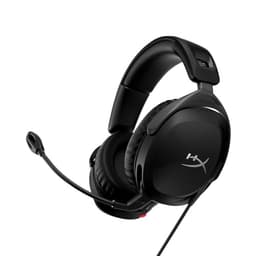
Wired
HyperX Cloud Stinger 2
A cable to the controller or the computer. Nothing to charge, nothing to pair, and more of your money spent on the actual sound.
Choose it if
- Your budget is under about $60
- You can't confirm which console they own
- They play at a desk or on a sofa, not roaming
- They'd find charging one more thing annoying
$49.99 · See it on AmazonPrice as of October 24, 2026. #ad How we’re funded
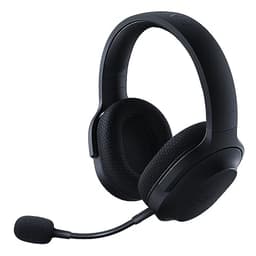
Wireless
Razer Barracuda X
A small USB dongle or Bluetooth, and no cable at all. Freedom to walk off mid-game, at the cost of charging it and paying more for the same sound.
Choose it if
- You're spending $100 or more
- They get up and move around while playing
- They'd also use it with a phone away from the desk
- They've specifically said they want wireless
Side by side
| Wired | Wireless | |
|---|---|---|
| Best under $60 | Yes — better sound and mic for the money | Compromised; the budget goes to the radio |
| Best over $100 | Fine, but you're leaving convenience on the table | Yes — this is where wireless earns it |
| Charging | Never | Every few days to weekly |
| Works with Xbox | Yes, via the controller's 3.5 mm socket | Only Xbox-specific models |
| Works with Switch | Yes, 3.5 mm socket on the console | Depends on the model |
| Setup | Plug it in | Pair it, or plug in a dongle |
| Failure mode | A cable that can snag | Flat battery mid-session |
The Xbox problem, stated clearly
This is the part that catches out well-meaning gift buyers, so it deserves its own section.
Xbox consoles use a proprietary wireless protocol rather than the standard USB dongle approach that PlayStation, PC and Switch accept. The practical effect is that a great many wireless gaming headsets — including several that are widely recommended — simply will not connect wirelessly to an Xbox. Manufacturers often sell a separate Xbox variant of the same headset for this reason.
Wired headsets have no such issue: they plug into the 3.5 mm socket on the bottom of an Xbox controller and work immediately. If your recipient is an Xbox player and you want to buy wireless, you must find the model that says Xbox on it. If you’re not confident, wired removes the risk entirely, and it’s a large part of why the wired Cloud Stinger 2 is the headset we suggest most often to gift buyers.
For the console-by-console detail — what PS5, Switch and Switch 2 accept, why Bluetooth gives a Switch player sound but not voice chat, and the plug standard that matters on Xbox — see our headset compatibility guide.
Where wireless genuinely wins
Someone who moves. Not everyone plays sitting still. People get up for a drink, answer the door, wander to another room during a loading screen. If you’ve noticed the person you’re buying for doing that, wireless is a real quality-of-life improvement rather than a spec-sheet one.
Shared spaces. A cable across a living room is a trip hazard with children or pets around.
Dual use. Better wireless headsets connect to a console and a phone at the same time, so the same pair handles the game and a phone call. Someone who’d otherwise own two sets of headphones gets real value from that.
Where wired genuinely wins
Price. Every dollar not spent on a battery is spent on sound. At gift budgets this is the dominant factor.
Reliability. There is no pairing, no firmware, no dongle to lose and no battery to die at the worst moment. For a child or a technophobe, that matters more than freedom of movement.
Universality. One wired headset works on the Xbox, the PlayStation, the Switch, the laptop and the phone. If the household has several devices — or if you aren’t certain what they have — that flexibility is worth a great deal.
Our recommendation by budget
Under $60: wired, every time. See gifts under $50 for the shortlist.
$60 to $100: a genuine toss-up. A light wireless pair is a lovely gift at this level if you can confirm the console; otherwise stay wired and spend the difference on a game.
Over $100: wireless. At this point you get the convenience without sacrificing the sound, and the Arctis Nova 7 is the pair we’d point most people at — in the Xbox version, if that’s their console.
One thing that doesn’t matter as much as you’d think
You’ll see a lot written about wireless lag. On a modern dongle-based gaming headset, the delay is far too small for a normal person to detect. Don’t let it drive your decision — the price and the compatibility questions are the real ones.
Once you have picked a format, pick a price
Format is the decision this page exists for. The next one is budget, and cheap headsets have stopped being bad — a $50 wired set from a real brand now has full-size drivers and a usable boom mic. Our best cheap gaming headset roundup ranks four of them with live prices, and says what the next $50 actually buys.
Frequently asked questions
Is a wired or wireless gaming headset better as a gift?
Under about $60, wired — the money goes into sound and comfort instead of a battery and a radio, and it works on every console through the standard headphone socket. Over about $100, wireless is worth it for someone who plays often. Between those, it depends on whether they move around while playing.
Do wireless headsets work with Xbox?
Only models made specifically for Xbox. Xbox consoles use their own wireless standard rather than the USB dongle approach used by PlayStation, PC and Switch, so many popular wireless headsets don't connect to an Xbox at all. Wired headsets work on Xbox without any of this difficulty.
Is there noticeable lag on a wireless gaming headset?
Not on a modern dongle-based gaming headset — the delay is too small for a normal player to detect. It's the least important factor in this decision; price and console compatibility matter far more.
What's the safest headset to buy if I don't know their console?
A wired headset with a 3.5 mm plug. That connection exists on an Xbox controller, a PlayStation DualSense, the top of a Nintendo Switch, a laptop and most phones with an adapter, so it works regardless of what they own.
How long do wireless gaming headsets last on a charge?
It varies by model, but good mid-range and premium pairs quote figures in the tens of hours, which for most people means charging weekly rather than daily. Check the manufacturer's stated figure on the specific model you're considering rather than assuming.
Sources
- Amazon — Video Games store — Amazon's video-games storefront, where the games, gift cards and gear on this site are sold and priced (accessed July 22, 2026)
- Nintendo — Bluetooth audio on Nintendo Switch — Nintendo's own page: “With system version 13.0.0 or higher, it's possible to use Bluetooth audio devices such as wireless earphones, headphones, and speakers”, and “Bluetooth microphone input is not supported” (accessed September 18, 2026)
- Nintendo Support — How to Pair and Manage Bluetooth Audio Devices on Nintendo Switch 2 — Nintendo's own article: once paired, “any audio that is played will be output through your Bluetooth device”, and “Bluetooth microphones cannot be used” (accessed September 18, 2026)
- Xbox Support — Connect a compatible headset — Microsoft's own article: “If you have an Xbox Wireless Controller with a 3.5mm port, you can connect a headset with a standard 3.5mm jack directly to the controller”; “If you use an OMTP headset, you'll probably experience audio or chat issues”; “The Xbox One console does not feature Bluetooth functionality” (accessed September 18, 2026)
Keep browsing
Stinger 2 vs Logitech G321
Wired against wireless at almost the same price — the sharpest version of this question.
Compare them→HyperX Cloud Stinger 2 review
The budget wired headset we recommend most.
Read the review→Arctis Nova 7 review
The wireless pair worth splurging on, and the version trap.
Read the review→Gaming gifts for teens
Where a headset lands hardest.
See teen gifts→