How many controllers do you actually need?
This is the question that decides whether a family game works on the day, and almost nothing on a shop listing explains it clearly.
A Nintendo Switch arrives with two small controllers attached to the sides of the screen — the Joy-Con. They detach, and for a lot of games each half counts as a complete controller for one player. So a brand-new Switch can already run two players for Mario Kart, party games and sports games, with nothing else bought.
Beyond two players you need more hardware. Three or four players means another pair of Joy-Con or a couple of standard controllers, which is a real cost — often more than the game itself. Our Pro Controller versus Joy-Con comparison explains which shape is the better buy, and the short version is: buy Joy-Con if you want more players, buy a Pro Controller if you want one person to be more comfortable.
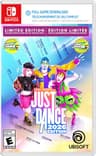
Two exceptions worth knowing. The dancing game needs one controller per dancer but phones can stand in for some of them, which quietly solves the four-player problem for free. And the sports game needs detachable controllers, which means it does not work on a Switch Lite — that model has its controls built into the body. If the household’s console is a Lite, check that line on every pick before you buy.
Match the game to the youngest player, not the average
The instinct is to pick something that suits the middle of the family. In practice the youngest player sets the ceiling, because if they can’t keep up they stop playing, and then it isn’t a family game any more.
Racing and party games handle this best, because both have built-in helpers — steering assistance, random events, minigames short enough that a bad round doesn’t matter. Fighting and platform games handle it worst, because skill gaps show up immediately and nothing hides them. Both of the big Nintendo party series have a newer and an older game on sale right now, and our Mario Party Jamboree vs Superstars and Mario Kart World vs 8 Deluxe comparisons say which one to give.
Five of the seven picks here are rated E for Everyone. Two are E10+, which is worth knowing rather than worth avoiding — it typically means cartoon action rather than anything upsetting. Our age ratings guide explains what each letter covers and, more usefully, what the descriptors underneath it mean when you’re buying for someone else’s children.
The four-player test, and what fails it
Before you buy any family game that isn’t on this page, check three things on the box or the listing. Does it say local or couch multiplayer? “Multiplayer” on its own often means online only, with each player in a separate house. How many players on one console? Some games cap at two even though they look like party games. Does it need a separate screen per player? A few do, and they’re unplayable as a living-room gift.
Games that fail the test aren’t bad games — they’re just not this gift. If the family you’re buying for mostly plays separately, a console gift card or something for their individual setups will land better than a party game nobody gets to use.
If the family doesn’t own a Switch
Most of this page is Nintendo Switch, and that’s not favoritism — it’s where local multiplayer lives. Nintendo has kept building games for four people on one sofa while the other platforms largely moved online.
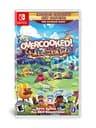
For a PlayStation or Xbox household, the cooking game and a handful of others are available on those consoles too, and each pick above lists what it works with. If the family has no console at all and you’re considering buying one, read which console to buy as a gift first — for a household that wants to play together, the answer is usually not the most powerful one.