The four kinds of Mario game
The platformers. Running and jumping through levels, left to right or through 3D worlds. This is the core series and the safest gift, because it’s what people picture when they think of Mario. Playable alone or with others on the same screen.
The karting. Racing with items and shortcuts. It’s the single most-owned game in the whole family, so it’s the best gift for a household that hosts and the riskiest for an individual — the chance they already have it is genuinely high.
The party games. A board game with minigames between turns, built for four people in a room. Superb for a family; pointless for someone who plays alone. Our party games list covers the wider category.
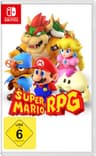
The role-playing games. Story, characters, turn-based battles and a lot of reading. The one flavor that suits an older fan who wants something to sink into, and the one to avoid for a young child who wants to jump on things.
Matching the game to the person
A child under about seven wants a platformer, and specifically one where other people can join in and help. The newest games in the series are built for exactly that — several players on one screen, and modes where a struggling player can’t really fail.
A family wants karting or the party game. Both handle four players with wildly different skill levels, which is the thing that makes or breaks a living-room game. Check how many controllers they own first — our family games page explains why that matters more than the game you choose.
An adult who grew up with it usually wants either the newest platformer or the role-playing remake. Nostalgia is the driver here, and the remake of a game they played as a teenager is a more emotionally accurate gift than anything new.
Someone slightly spooked by difficulty should get the ghost-hunting spin-off, which is gentle, funny and structured as a series of small puzzle rooms rather than a test of reflexes.
The duplicate problem
Mario games are the most-owned games on the Switch, so the odds of buying something they already have are higher here than in any other fandom. Three ways around it.
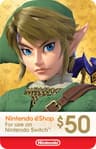
Ask the household. A partner or parent can check the console’s library in thirty seconds. Buy the newest release, since the recently published game is the one least likely to be owned already. Or buy the eShop card and let them pick — unglamorous, but it cannot be a duplicate, and our guide to eShop cards explains how to give one without it feeling like handing over cash.
Switch, Switch Lite, Switch 2 — what works where
Nearly all of these games run on any Switch: the original, the handheld-only Lite, and the OLED model. The newer Switch 2 also plays most original Switch games, so a game bought today isn’t stranded if they upgrade — but check the box if you’re buying a game made specifically for the newer console, because that doesn’t work in reverse.
The one thing to watch is player count. Games that need two separate controllers can’t be played by two people on a Switch Lite, because its controls are built into the body. Our Switch 2 versus Switch Lite comparison spells out that difference, and gifts for Switch fans covers the accessories side.
Beyond the games
If they own everything, the honest answer is that Mario merchandise is a thinner category than it looks — a lot of it is licensed tat at licensed prices. Two directions that do work: something for the console rather than the character (a better controller, a case, a bigger memory card), or a different Nintendo fandom entirely. Plenty of Mario fans are equally happy with Zelda or Pokémon, and both have better physical gifts attached to them. If the household leans toward speed rather than plumbing, our gifts for Sonic fans page covers a fandom that is not tied to a Nintendo console at all.
Two things worth reading before you buy
If a small Nintendo figure is on your list, our guide to what an amiibo is explains what the chip in the base actually does and the one condition that decides whether it is a good present. And if the Mario fan in question has the newest console, the question of which game to buy first is answered in Donkey Kong Bananza versus Mario Kart World — which turns on how many people are in the house.