A job to do, or a place to be
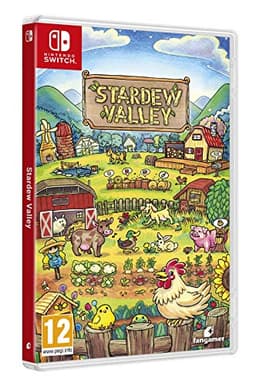
Stardew Valley opens with a premise and a problem. In the game’s own words: “You’ve inherited your grandfather’s old farm plot in Stardew Valley,” with “hand-me-down tools and a few coins”, and a town whose community center “now lies in shambles.” The question it asks is whether you can turn “these overgrown fields into a thriving home.” That’s a gentle question, but it is a question — there’s always a next thing to do.
Animal Crossing asks nothing. Nintendo’s description is an invitation rather than a task: create “your own personal paradise on a deserted island,” where “each day brings different discoveries” and the critters you find change “depending on the season and time of day.” You craft furniture, place homes for animal neighbors, chat with them “whenever you feel like it” and decorate. Nothing is urgent. For some people that’s bliss; for others it’s aimless.
The test: does the person you’re buying for enjoy ticking things off a list? Stardew. Would they rather potter in a garden than finish a project? Animal Crossing.
Buying for a child: the rating gap
This is the most concrete difference, and the one that matters most for a parent or grandparent. Animal Crossing is rated E (Everyone), with Comic Mischief and Mild Fantasy Violence as its descriptors. Stardew Valley is rated E10+, and its descriptors are longer: Fantasy Violence, Mild Blood, Mild Language, Simulated Gambling, and Use of Alcohol and Tobacco.
None of that makes Stardew a grown-up game — E10+ is a mild rating — but it does mean Animal Crossing is the straightforward choice for a younger child, and Stardew is a better fit from about ten. Our guide to game age ratings explains what each descriptor means in practice.
Playing together
On one Switch, Animal Crossing is the more sociable game: Nintendo says up to four players can play on the same island at the same time with one console and one copy, and up to eight people can live on the same island within one game. Stardew Valley’s developer says split-screen co-op on the Switch is limited to two players.
Online, both work. Stardew lets you invite one to three other players to your farm; Animal Crossing lists online play for up to eight, and up to twelve when everyone has the Nintendo Switch 2 Edition. For a couple, both are lovely; for a family of four sharing one console, Animal Crossing wins. Our co-op games for couples list has more for two.
Which console do they have?
Stardew Valley is available on PlayStation, Xbox, PC and phones as well as the Switch, so it’s the only one of the two you can give someone without a Nintendo console — our buy link is the Switch edition, so pick the version for their device. Animal Crossing is a Nintendo game. On a Switch 2, Nintendo sells a Nintendo Switch 2 Edition, and owners of the original can buy an upgrade pack rather than the whole game again.
What if they already have one?
Give them the other. These two are genuinely different experiences, and plenty of people love both. If they already own both, the alternatives above are in the same gentle spirit, and our games for non-gamers and Switch games for adults lists go further.